 Now accepting new patients - same-week appointments available!

Introduction: Why Habits — Not Diets — Drive Real Weight Loss
Over my two decades caring for patients across Florida, I've watched countless people lose 20, 30, even 80 pounds, and I've watched many regain it. The difference between those who succeed long-term and those who relapse almost never comes down to which diet they chose. It comes down to the daily healthy habits for weight loss they built into their lives.
The numbers tell a sobering story. The CDC reports that more than 2 in 5 U.S. adults, roughly 40.3%, now have obesity, and 9.4% have severe obesity (BMI ≥ 40). Obesity contributes to over $173 billion in annual U.S. medical costs and raises the risk of heart disease, type 2 diabetes, fatty liver disease, several cancers, sleep apnea, and depression.
Yet here is the encouraging truth I share with every new patient: even modest, sustainable weight loss of 5–10% of body weight produces measurable improvements in blood pressure, cholesterol, blood sugar, joint pain, and energy. You don't need a crash diet, a 90-day shred, or a celebrity meal plan. You need a handful of evidence-based habits, practiced consistently.
This guide distills what I've learned from 20 years of practice and the most recent peer-reviewed research (including 2024 and 2025 studies) into a clear, actionable roadmap for sustainable weight loss.
Table of Contents
The Science of Habit Formation and Weight Loss
Habit #1: Build Every Plate Around Whole Foods
Habit #2: Prioritize Protein and Fiber at Every Meal
Habit #3: Practice Mindful and Portion-Aware Eating
Habit #4: Hydrate Strategically (Not Just "Drink More Water")
Habit #5: Move Daily, Including NEAT
Habit #6: Add Strength Training 2–3 Times Per Week
Habit #7: Protect Your Sleep
Habit #8: Manage Stress and Emotional Eating
Habit #9: Track Smartly (Not Obsessively)
Habit #10: Build a Support System
When to Talk to a Healthcare Provider About Medical Weight Loss
Common Weight-Loss Mistakes I See in My Florida Practice
Frequently Asked Questions (FAQ)
Final Thoughts from a 20-Year FNP
References
The Science of Habit Formation and Weight Loss
Before we dive into the habits themselves, here's the most important thing I tell patients: habits beat motivation, every time.
A 2024 systematic review on habit formation found that new behaviors take a median of 59–66 days to become automatic, with "implementation intentions", concrete if-then plans like "If it's 7 a.m., then I lace up and walk for 20 minutes", significantly speeding the process. Motivation fluctuates daily; habits run on autopilot once established.
Behavioral scientists also recommend habit stacking, which means anchoring a new behavior to an existing routine. For example, "After I pour my morning coffee, I drink a 16-oz glass of water" is far more likely to stick than a vague goal like "drink more water."
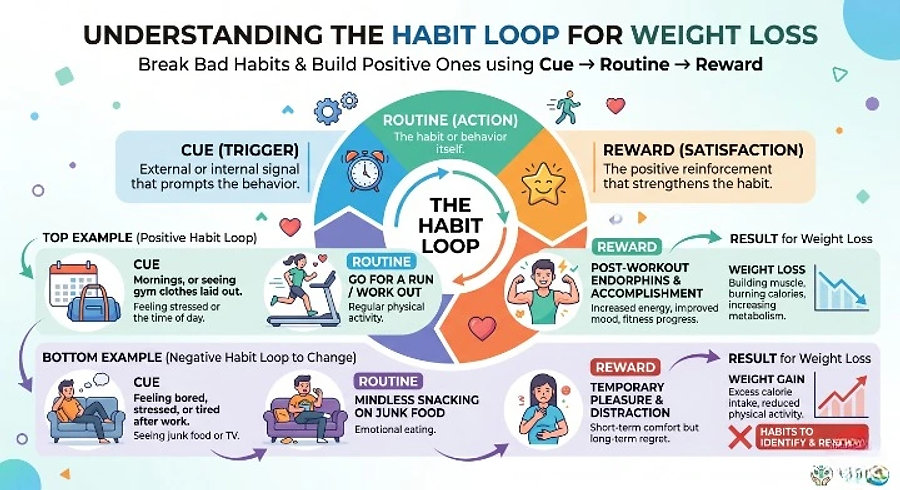
The 10 habits below are sequenced from highest-impact to supportive. You do not need to start all of them at once. Pick one or two, anchor them to an existing routine, practice for 2–4 weeks, then layer the next.
Habit #1: Build Every Plate Around Whole Foods
The single biggest predictor of long-term weight loss in my clinical practice is the percentage of meals built around whole, minimally processed foods.
A 2024 NIH-funded study found that diets high in ultra-processed foods (packaged snacks, sugary drinks, frozen meals, fast food, processed meats) lead participants to consume roughly 500 more calories per day than diets built on whole foods, without feeling more full. The 2025 State of Obesity report from Trust for America's Health flagged ultra-processed foods as a leading driver of the U.S. obesity crisis.
What This Looks Like in Practice
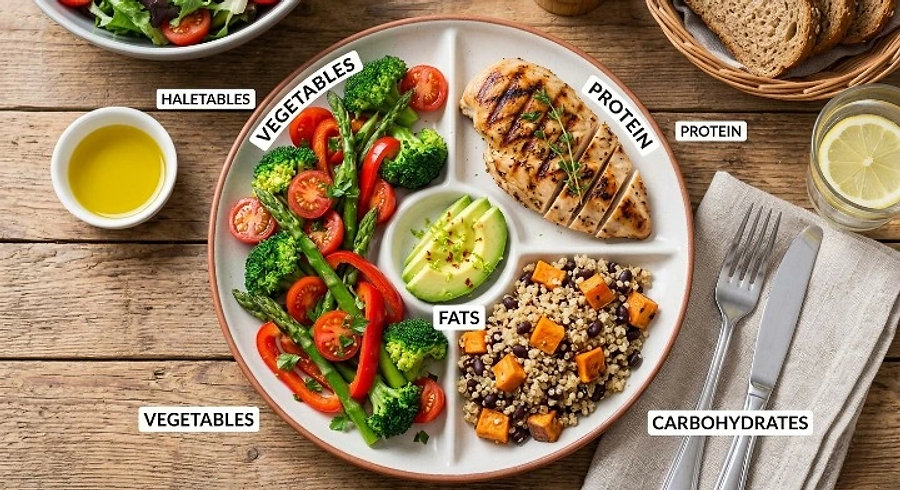
Use the "Healthy Plate" method at most meals:
½ the plate: non-starchy vegetables (leafy greens, broccoli, peppers, cucumbers, tomatoes, zucchini)
¼ the plate: lean protein (chicken, fish, eggs, tofu, beans, Greek yogurt)
¼ the plate: quality carbohydrates (sweet potato, quinoa, brown rice, oats, beans, fruit)
A thumb-sized portion of healthy fats (olive oil, avocado, nuts, seeds)
This approach mirrors the Mediterranean dietary pattern, which the American Heart Association and decades of research consistently rank as one of the best dietary patterns for weight, heart, and metabolic health.
Habit #2: Prioritize Protein and Fiber at Every Meal
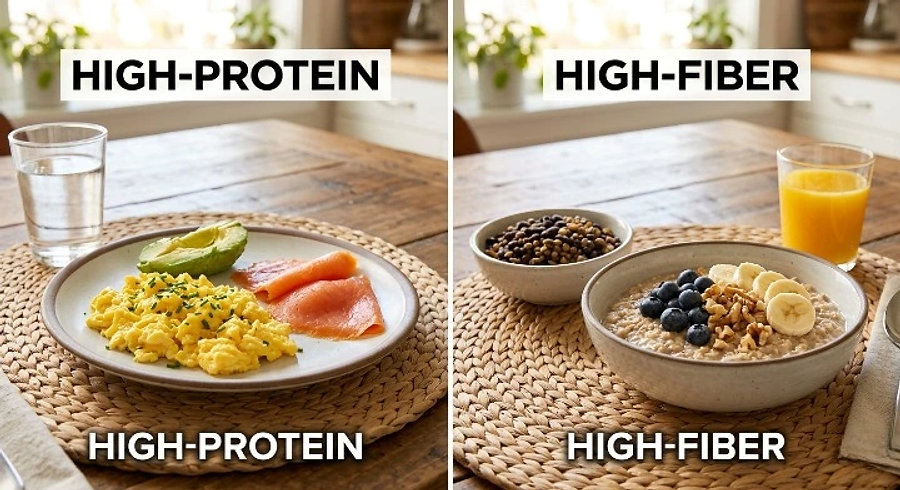
If I could pick only two nutrients to focus on for sustainable fat loss, I would choose protein and fiber. They are the most satiating macronutrients, and most Americans under-consume both.
Protein
Adequate protein supports muscle preservation during weight loss, increases satiety, and has the highest thermic effect of food (meaning your body burns more calories digesting it). For most adults pursuing weight loss, I recommend 0.7–1.0 grams of protein per pound of goal body weight per day, distributed across 3–4 meals.
Practical examples of one protein "serving" (~25–30g):
- 4 oz cooked chicken, fish, or lean beef
- 1 cup Greek yogurt + 2 tbsp nuts
- 4 large eggs or 1 cup egg whites with cheese
- 1 cup cottage cheese
- 1.5 cups cooked lentils or beans
Fiber
Fiber feeds your gut microbiome, slows digestion, and stabilizes blood sugar. The recommended intake is 25–38 grams per day, but most Americans get under 16. Excellent sources include berries, beans, lentils, chia and flax seeds, oats, broccoli, and pears.
Habit #3: Practice Mindful and Portion-Aware Eating
In a typical day in my clinic, I see at least one patient who eats well quality-wise but still gains weight because of portion drift, the gradual creep of larger servings, second helpings, and absent-minded snacking.
Mindful eating is a research-backed antidote. A 2023 meta-analysis in Obesity Reviews found that mindful-eating interventions produced significant reductions in binge eating, emotional eating, and body weight.
Practical Mindful-Eating Habits
- Eat at the table, without screens. TV and phone use during meals consistently increases calorie intake.
- Slow down. Chew each bite 15–20 times. It takes ~20 minutes for fullness signals to reach the brain.
- Use the "hunger scale" (1–10). Aim to start eating around a 3–4 (mildly hungry) and stop at 6–7 (comfortably satisfied), not 9–10 (stuffed).
- Pre-plate your food rather than eating from the bag or pan.
- Pause halfway through the meal and ask: "Am I still hungry, or just eating because food is in front of me?"
Habit #4: Hydrate Strategically (Not Just "Drink More Water")
You've heard "drink more water" a thousand times. Here is the more useful clinical version:
- Drink 12–20 oz of water within 30 minutes of waking. It rehydrates you after 7–9 hours without fluids and curbs early-morning hunger.
- Drink 8–16 oz before each meal. Multiple randomized trials show this leads to lower calorie intake and modest but meaningful additional weight loss compared to controls.
- Replace at least one sugar-sweetened beverage per day with water, sparkling water, unsweetened tea, or black coffee. Liquid calories are the most underestimated source of weight gain in my practice. A single 20-oz soda contains roughly 240 calories and 65 grams of added sugar, which is more than the entire daily limit recommended by the American Heart Association.
- Watch alcohol. Beyond its calories (about 100–150 per drink), alcohol disinhibits eating, disrupts sleep, and slows fat oxidation.
A reasonable daily target for most adults is half your body weight in ounces of water (e.g., 75 oz if you weigh 150 lbs), adjusted upward for Florida's heat, exercise, or pregnancy/breastfeeding.

Habit #5: Move Daily, Including NEAT
Most people equate "exercise" with "going to the gym." But for weight loss, what matters more is your total daily movement, including what researchers call NEAT (non-exercise activity thermogenesis): walking the dog, gardening, taking the stairs, fidgeting, and doing housework.
A 2024 review in Obesity Reviews highlighted that low NEAT is one of the strongest predictors of weight regain after dieting. Two patients with identical structured workouts can have a 300–500 calorie/day difference based on NEAT alone.
Daily Movement Targets I Give My Patients
- Walk 7,000–10,000 steps per day. Research shows the biggest mortality and metabolic gains occur between 4,000 and 8,000 steps; 10,000 is great but not magic.
- Aim for 150 minutes/week of moderate aerobic activity (brisk walking, cycling, swimming). This is the standard recommended by the CDC and the American Heart Association.
- Stand and move every 30–60 minutes if you have a desk job.
- Take "exercise snacks" , 1–3 minutes of stair-climbing, squats, or brisk walking spread across the day.

Habit #6: Add Strength Training 2–3 Times Per Week
If you take only one piece of advice from this article, let it be this: do not lose weight without lifting.
When you lose weight without resistance training, roughly 25–30% of the loss can come from lean muscle mass, which lowers your resting metabolic rate and makes regain easier. Strength training preserves (and often builds) muscle, improves insulin sensitivity, strengthens bones, and shapes the body composition changes patients actually want.
Beginner-Friendly Plan
- 2–3 full-body sessions per week, 30–45 minutes each
- Compound movements: squats, hinges (deadlifts), pushes (push-ups, presses), pulls (rows), and carries
- Start with bodyweight or light dumbbells; progressively increase resistance
- Allow 48 hours between sessions for recovery
This is especially important for women over 40 and adults over 60, where sarcopenia (age-related muscle loss) accelerates weight regain after dieting.
Habit #7: Protect Your Sleep
Sleep is the most overlooked weight-loss habit in my entire practice. Patients are surprised when I tell them their 6-hour-a-night habit may be sabotaging their results more than their diet.
A landmark 2022 randomized trial in JAMA Internal Medicine showed that overweight adults who increased nightly sleep by ~1.2 hours consumed 270 fewer calories per day without any other dietary intervention.
Why? Inadequate sleep:
- Raises ghrelin (hunger hormone) and lowers leptin (fullness hormone)
- Increases cortisol and insulin resistance
- Heightens cravings for high-sugar, high-fat foods
- Reduces willpower for healthy choices the next day
Sleep Habits I Recommend
- Aim for 7–9 hours per night (most adults).
- Keep a consistent sleep/wake time, even on weekends.
- Cool, dark, quiet bedroom (65–68°F is ideal).
- No screens for 30–60 minutes before bed, or use blue-light filters.
- No caffeine after 2 p.m. and avoid heavy meals or alcohol within 3 hours of bed.
- Get 10–15 minutes of morning sunlight to anchor your circadian rhythm.

Habit #8: Manage Stress and Emotional Eating
Chronic stress raises cortisol, which drives visceral (belly) fat storage and increases cravings for energy-dense foods. After 20 years of practice, I'd estimate that emotional and stress eating accounts for the single largest source of "unexplained" calories in my patients' lives.
Effective, Evidence-Based Stress Habits
- Daily 5–10 minute mindfulness or breathing practice (apps like Calm, Headspace, or Insight Timer)
- Outdoor walks: combine NEAT, sunlight, and stress relief
- Journaling: 5 minutes a day, especially helpful with food/mood tracking
- Therapy or coaching: Cognitive Behavioral Therapy (CBT) is the gold standard for emotional eating
- Social connection: laughter, conversation, and time with loved ones lower cortisol measurably
If you reach for food when you're not physically hungry, ask yourself: "Am I hungry, or am I HALT (Hungry, Angry, Lonely, or Tired)?" Naming the trigger is the first step toward changing the response.
Habit #9: Track Smartly (Not Obsessively)
Self-monitoring is one of the most consistent predictors of weight-loss success in the National Weight Control Registry, which tracks over 10,000 people who have lost ≥30 pounds and kept it off for ≥1 year.
But tracking does not have to mean weighing every gram of food. Choose what works for you:
- Weigh yourself 1–3 times per week at the same time of day. Watch trends, not daily fluctuations.
- Take monthly progress photos and waist-circumference measurements (waist circumference is now considered an even better predictor of metabolic risk than BMI alone, per a 2025 UK Biobank study of 315,000 adults).
- Use a food journal or app (MyFitnessPal, Cronometer, LoseIt) for at least the first 4–8 weeks.
- Track non-scale victories: energy, sleep, mood, clothing fit, blood pressure, A1C.
A note of caution from the clinic: if tracking becomes obsessive or triggers disordered patterns, stop and talk to your provider. Tracking is a tool, not a personality.
Habit #10: Build a Support System
Weight loss is a behavioral marathon, and the people around you shape your habits more than you realize. Studies on social networks show that health behaviors, both healthy and unhealthy, are remarkably contagious.
- Tell 2–3 trusted people about your goals.
- Find an accountability partner: a friend, spouse, coworker, or coach.
- Join a community: in-person, online, or through your healthcare provider.
- Work with a registered dietitian. A 2025 review in the Journal of the Academy of Nutrition and Dietetics showed adults working with a dietitian had significantly better weight loss, waist circumference, blood pressure, and quality-of-life outcomes.
- See a Family Nurse Practitioner or weight-management specialist for medical evaluation, lab work, and personalized treatment.
When to Talk to a Healthcare Provider About Medical Weight Loss
Habits are foundational, but for many patients, they are not enough on their own. As a board-certified Family Nurse Practitioner, I evaluate every weight-loss patient for:
- Thyroid disorders, PCOS, insulin resistance, sleep apnea
- Medication side effects (some antidepressants, beta-blockers, steroids, and antipsychotics cause weight gain)
- Hormonal changes (perimenopause, menopause, low testosterone)
- Mental health conditions (depression, anxiety, ADHD, trauma)
In appropriate patients with a BMI ≥ 30, or BMI ≥ 27 with weight-related conditions like type 2 diabetes, hypertension, or sleep apnea, FDA-approved medications can be a game-changer. Bariatric surgery remains the most effective long-term option for severe obesity (BMI ≥ 40, or ≥ 35 with comorbidities).
These tools are not replacements for healthy habits. They work with them. The patients who do best on weight-loss medications are the ones who simultaneously build the habits in this article.
Common Weight-Loss Mistakes I See in My Florida Practice
After 20 years and tens of thousands of patient visits, here are the most frequent traps I see:
- All-or-nothing thinking. One off-plan meal becomes "I blew it" becomes a week of derailment. Progress, not perfection.
- Cutting calories too aggressively. Eating under 1,200 calories per day (women) or 1,500 (men) usually backfires through muscle loss, hormonal disruption, and rebound eating.
- Skipping breakfast and overeating at night. Front-load your calories earlier in the day when possible.
- Drinking calories. Sweet tea, sodas, sweetened coffee drinks, juice, and alcohol add up shockingly fast.
- Relying only on cardio. Cardio without strength training accelerates muscle loss.
- Weighing daily and panicking over normal fluctuations (water, hormones, salt).
- Comparing to social media. Most "transformations" you see online are filtered, posed, or paid promotions.
- Quitting after 2–3 weeks. Habits take 60+ days to automate; significant body composition change takes 12+ weeks.
Frequently Asked Questions (FAQ)
What are the top healthy habits for weight loss?
The most evidence-based habits are: building meals around whole foods, prioritizing protein and fiber, mindful eating, daily movement plus strength training, 7–9 hours of sleep, stress management, hydration, self-monitoring, and building a support system.
How fast can I lose weight safely?
Most clinicians (including me) recommend 0.5–2 pounds per week, or roughly 1% of body weight per week. Faster loss is possible but typically increases muscle loss, gallstone risk, and regain rates.
Do I have to count calories to lose weight?
Not necessarily. Many patients succeed with portion control, the plate method, and protein/fiber targets alone. However, tracking for the first 4–8 weeks builds awareness and is one of the most reliable predictors of success.
What's the best diet for weight loss?
The best diet is the one you can sustain. Mediterranean, DASH, lower-carb, plant-forward, and balanced macro approaches all work when calorie intake is appropriate and the food is nutrient-dense. There is no single "best" diet for everyone.
Why am I exercising and not losing weight?
Common reasons: you're eating back the calories you burned, you're losing fat but gaining muscle (which weighs more), water retention from new exercise, inadequate sleep, high stress, or a medical condition. A provider can help you troubleshoot.
How do I stop emotional eating?
Identify your triggers (HALT: Hungry, Angry, Lonely, Tired), build non-food coping skills (walking, journaling, calling a friend), practice mindful eating, and consider working with a therapist trained in CBT or eating-behavior counseling.
Is intermittent fasting effective for weight loss?
For some people, yes. It's primarily another way to create a calorie deficit. It is not superior to other approaches in head-to-head trials, and it's not appropriate for those with a history of disordered eating, pregnancy, or certain medical conditions.
Final Thoughts
If you take only one message away from this guide, let it be this: healthy habits for weight loss are not punishments. They are gifts to your future self.
Twenty years into this work, I am still moved when patients tell me, "I haven't slept this well in years," or "I played with my grandkids without losing my breath," or "My A1C is finally normal." That is what these habits really deliver. Weight loss is the side effect.
Start with one habit.
Anchor it to something you already do.
Practice it for 30 days.
Then layer in the next.
Be patient. Be consistent.
Be kind to yourself when you slip, because you will, and that's fine.
If you live in Florida and would like to work with our team for medical evaluation, personalized planning, or appropriate medication management, please reach out. Your healthiest self is closer than you think.

About the Author
Darlyne Georges, MSN, APRN, FNP-C, is a board-certified Family Nurse Practitioner based in Florida with over 20 years of clinical experience in weight management, primary care, and metabolic health. She specializes in evidence-based, individualized weight-loss programs that combine lifestyle medicine, behavioral coaching, and (when appropriate) FDA-approved medical therapies.
Related reading from our team: What Is Medical Weight Loss? How Provider-Supervised Programs Actually Work, How to Break a Weight Loss Plateau, and How to Keep Weight Off Long-Term.
References
- Centers for Disease Control and Prevention. Adult Obesity Facts. Updated 2025. https://www.cdc.gov/obesity/adult-obesity-facts/index.html
- Centers for Disease Control and Prevention. Losing Weight. https://www.cdc.gov/healthy-weight-growth/losing-weight/index.html
- National Center for Health Statistics. Obesity and Severe Obesity Prevalence in Adults: United States, August 2021–August 2023. NCHS Data Brief No. 508, September 2024.
- Trust for America's Health. State of Obesity 2025: Better Policies for a Healthier America. October 2025.
- American Heart Association. Losing Weight. https://www.heart.org/en/healthy-living/healthy-eating/losing-weight
- Harvard Health Publishing. 5 Habits That Foster Weight Loss. Harvard Medical School. https://www.health.harvard.edu/heart-health/5-habits-that-foster-weight-loss
- UF Health. Healthy Habits for Weight Loss. https://ufhealth.org/care-sheets/healthy-habits-for-weight-loss
- Hall KD, et al. Ultra-processed diets cause excess calorie intake and weight gain. Cell Metabolism. 2019; updated NIH commentary 2024.
- Tasali E, et al. Effect of sleep extension on objectively assessed energy intake among adults with overweight in real-life settings: A randomized clinical trial. JAMA Internal Medicine. 2022;182(4):365-374.
- Lally P, et al. Habit formation and behavior change: systematic review update. 2024.
- UK Biobank Cohort Study (315,457 adults). Waist circumference and cancer risk. 2025 analysis.
- Journal of the Academy of Nutrition and Dietetics. Dietitian-led weight-loss interventions in overweight and obese adults: a 2025 review.
- National Weight Control Registry. http://www.nwcr.ws
- U.S. Department of Health and Human Services. Physical Activity Guidelines for Americans, 2nd Edition.
- American Heart Association. Added sugars recommendations. https://www.heart.org
Have questions about your health?
Same-week appointments available in-person or via Telehealth in Brandon, FL.
Book an Appointment →

