 Now accepting new patients - same-week appointments available!


Introduction: The Quiet Driver Behind So Many Chronic Diseases
In my 20 years as a Florida nurse practitioner, one theme keeps surfacing across nearly every chronic condition I treat: chronic, low-grade inflammation. Unlike the helpful, short-term inflammation that heals a cut or fights an infection, this kind is silent. It simmers below the surface for years, quietly damaging blood vessels, joints, organs, and even brain cells.
Researchers now link chronic inflammation to virtually every major chronic disease, including heart disease, type 2 diabetes, certain cancers, arthritis, and cognitive decline. The encouraging news is that what you eat is one of the most powerful tools you have to turn the inflammation down.
An anti-inflammatory diet is not a fad or a rigid program. It is a way of eating, very close to the Mediterranean pattern, that emphasizes whole, colorful, minimally processed foods and limits the ones that stoke inflammation. Studies show this approach can lower inflammatory markers like C-reactive protein (CRP), interleukin-6 (IL-6), and TNF-alpha within just 4 to 8 weeks, while improving energy, heart health, and blood sugar.
This guide explains exactly which foods fight inflammation, which ones feed it, and how to build an anti-inflammatory plate that also happens to boost your energy.
Table of Contents
- What Is Inflammation, and Why Does It Matter?
- What Is an Anti-Inflammatory Diet?
- How It Fights Disease and Boosts Energy
- The Best Anti-Inflammatory Foods
- Foods That Fuel Inflammation (Limit These)
- The Power of Polyphenols
- Omega-3s: The Anti-Inflammatory All-Stars
- The Gut, Fermented Foods, and Inflammation
- Herbs and Spices That Fight Inflammation
- How to Build an Anti-Inflammatory Plate
- A Simple Day of Anti-Inflammatory Eating
- Common Mistakes I See in My Florida Practice
- Frequently Asked Questions (FAQ)
- Final Thoughts from a 20-Year FNP
- References

What Is Inflammation, and Why Does It Matter?
Inflammation is your immune system's natural response to threats like injury or infection. Acute inflammation is good and necessary: it brings healing resources to a wound, then resolves.
Chronic inflammation is different. It is a persistent, low-level immune activation that does not switch off. Often you cannot feel it, but over months and years it contributes to:
- Heart disease and atherosclerosis (by promoting oxidation of LDL cholesterol and plaque buildup)
- Type 2 diabetes and insulin resistance
- Joint pain and arthritis
- Certain cancers
- Cognitive decline and neurodegenerative disease
- Fatigue, low mood, and brain fog
Diet directly influences this process by affecting inflammatory pathways (like NF-kB), cytokine production, oxidative stress, and the health of your gut microbiome.
What Is an Anti-Inflammatory Diet?
An anti-inflammatory diet emphasizes nutrient-dense, minimally processed foods rich in polyphenols, antioxidants, fiber, and omega-3 fatty acids, while limiting refined carbohydrates, added sugar, processed meats, and ultra-processed foods.
It is not a single branded diet. Several well-studied eating patterns are naturally anti-inflammatory, including:
- The Mediterranean diet (the most studied and a great default)
- The DASH diet
- The Nordic diet
What they share is an abundance of vegetables, fruits, legumes, whole grains, nuts, olive oil, and fish, and a scarcity of processed and sugary foods.
The DASH diet is one anti-inflammatory pattern with strong blood pressure benefits. See: The DASH Diet for Beginners: A 7-Day Meal Plan.

How It Fights Disease and Boosts Energy
The benefits of eating this way are both measurable and felt:
- Heart health: Anti-inflammatory diets lower CRP and improve endothelial function (blood vessel flexibility), reduce LDL oxidation, and support healthy blood pressure and cholesterol.
- Blood sugar: Clinical trials report improved insulin sensitivity, lower fasting glucose, and reduced HbA1c.
- Brain and mood: Lower inflammation is linked to better cognitive function and reduced risk of depression and neurodegenerative disease.
- Energy: By stabilizing blood sugar, supporting the gut, and reducing the metabolic burden of inflammation, this way of eating helps many people feel noticeably more energetic.
- Joint comfort: Many patients with achy joints report improvement when they shift toward anti-inflammatory eating.
Inflammation and fatigue often go together. See: Why Am I Always Tired? 10 Medical Causes of Fatigue.
The Best Anti-Inflammatory Foods
Build your meals around these:
Fatty Fish
Salmon, mackerel, sardines, herring, and trout are rich in omega-3 fatty acids. Aim for at least two servings per week.
Colorful Vegetables
Leafy greens (spinach, kale), broccoli, peppers, tomatoes, carrots, and beets. The more color and variety, the better.
Berries and Fruit
Blueberries, strawberries, blackberries, cherries, oranges, and apples are loaded with polyphenols and antioxidants.
Extra-Virgin Olive Oil
A cornerstone of the Mediterranean diet, rich in anti-inflammatory polyphenols and healthy monounsaturated fat.
Nuts and Seeds
Walnuts (especially high in omega-3s), almonds, flaxseeds, and chia seeds. A daily ounce provides healthy fats, magnesium, and vitamin E.
Legumes and Whole Grains
Beans, lentils, chickpeas, oats, quinoa, and brown rice provide fiber that feeds beneficial gut bacteria.
Fermented Foods
Yogurt, kefir, sauerkraut, kimchi, and miso support gut health. A Stanford study found that a diet high in fermented foods for 10 weeks significantly reduced 19 inflammatory markers and increased microbiome diversity.
Foods That Fuel Inflammation (Limit These)
Just as important as what you add is what you cut back:
- Added sugars and high-fructose corn syrup, the single most inflammatory component of the modern Western diet
- Refined carbohydrates (white bread, pastries, sugary cereals)
- Ultra-processed foods with artificial additives and emulsifiers, linked to elevated CRP and gut disruption
- Processed and cured meats (bacon, sausage, deli meats, hot dogs)
- Excess omega-6 from refined seed oils used heavily in fried and packaged foods
- Trans fats (found in some fried and commercially baked goods)
- Excess alcohol
- Sugar-sweetened beverages (a major issue in Florida's heat, where sweet tea and soda flow freely)
You do not have to be perfect. Reducing these foods, rather than obsessing over eliminating every trace, is what produces results.
The Power of Polyphenols
Polyphenols are plant compounds with potent antioxidant and anti-inflammatory effects. They help by neutralizing free radicals and inhibiting inflammatory pathways like NF-kB. You will find them concentrated in:
- Berries (especially dark ones)
- Extra-virgin olive oil
- Dark chocolate (in moderation, 70% cacao or higher)
- Red grapes
- Green tea
- Colorful vegetables, herbs, and spices
A simple rule I share with patients: eat the rainbow. The wider the variety of natural colors on your plate, the broader the range of protective polyphenols you take in.
Omega-3s: The Anti-Inflammatory All-Stars
Omega-3 fatty acids are among the most consistently anti-inflammatory nutrients we know of. Research, including meta-analyses, shows omega-3s significantly reduce CRP and other inflammatory markers. The best sources:
- Fatty fish: salmon, sardines, mackerel, herring (aim for two-plus servings weekly)
- Walnuts
- Flaxseeds and chia seeds
Modern Western diets tend to be far too high in omega-6 (from refined seed oils) and too low in omega-3, which tilts the body toward inflammation. Shifting that balance is one of the most impactful dietary changes you can make.
Omega-3s also support healthy cholesterol. See: High Cholesterol: How to Lower It Naturally Without Medication.
The Gut, Fermented Foods, and Inflammation
Your gut microbiome plays a central role in regulating inflammation throughout your body. Beneficial gut bacteria ferment dietary fiber into short-chain fatty acids like butyrate, which strengthen the gut barrier, reduce permeability, and calm systemic inflammation.
To support a healthy, anti-inflammatory gut:
- Eat plenty of fiber from vegetables, fruits, legumes, and whole grains
- Include fermented foods like yogurt, kefir, sauerkraut, and kimchi
- Eat a wide variety of plants, which promotes microbiome diversity
- Limit ultra-processed foods and artificial additives, which can disrupt the gut
Herbs and Spices That Fight Inflammation
Beyond adding flavor without salt or sugar, several herbs and spices have anti-inflammatory properties:
- Turmeric (and its active compound curcumin), especially when paired with black pepper for absorption
- Ginger
- Garlic
- Cinnamon
- Rosemary, oregano, and basil
These are an easy, low-effort way to boost the anti-inflammatory power of everyday meals.
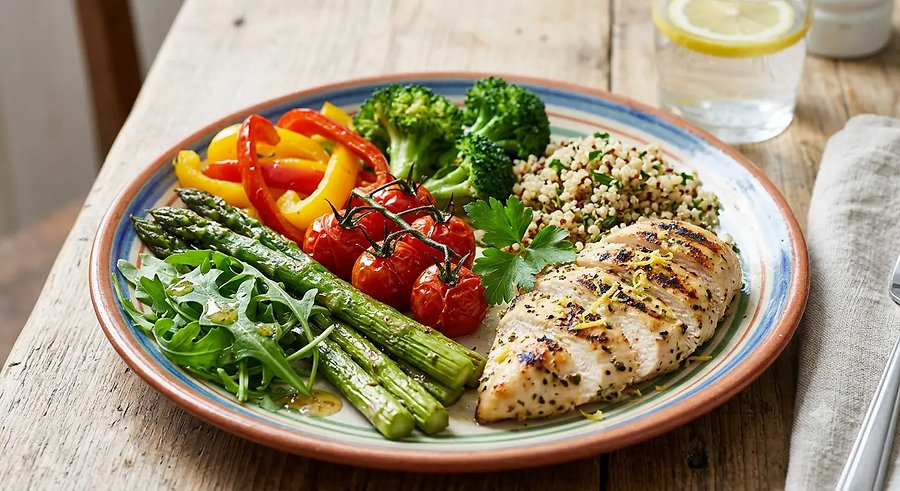
How to Build an Anti-Inflammatory Plate
A simple visual makes this easy at every meal:
- Half your plate: colorful non-starchy vegetables and some fruit
- One quarter: lean protein, ideally fish a few times a week, plus legumes, poultry, eggs, or tofu
- One quarter: high-fiber whole grains or starchy vegetables
- Healthy fat: a drizzle of extra-virgin olive oil, a few nuts, or some avocado
- Flavor: herbs and spices instead of heavy salt or sugary sauces
- Drink: water, sparkling water, or unsweetened tea (green tea is a bonus)
This plate also supports weight management. See our pillar post: Healthy Habits for Weight Loss.
A Simple Day of Anti-Inflammatory Eating
- Breakfast: Oatmeal topped with blueberries, walnuts, and a sprinkle of cinnamon
- Lunch: Large salad with leafy greens, chickpeas, cherry tomatoes, peppers, olive oil, and grilled salmon
- Snack: Plain Greek yogurt with strawberries, or an apple with almonds
- Dinner: Baked fish or a lentil stew, roasted vegetables, quinoa, and a side of sautéed greens with garlic
- Drinks: Water and green tea throughout the day
Simple, colorful, satisfying, and anti-inflammatory from morning to night.
Common Mistakes I See in My Florida Practice
After 20 years of guiding patients, here are the pitfalls I see most often:
- Chasing "superfood" supplements instead of eating whole foods, where the real, well-documented benefits are.
- Adding anti-inflammatory foods but not cutting the inflammatory ones. Both halves matter, especially reducing sugar and ultra-processed foods.
- Overlooking sugary drinks. Sweet tea and soda are major inflammatory contributors.
- Expecting overnight results. Inflammatory markers typically improve over 4 to 8 weeks of consistent eating.
- Going to extremes. A sustainable, colorful, mostly-whole-foods pattern beats a rigid, joyless elimination diet you cannot maintain.
- Forgetting the gut. Fiber and fermented foods are easy to skip but powerful for lowering inflammation.
Frequently Asked Questions (FAQ)
What is an anti-inflammatory diet?
It is a way of eating that emphasizes whole, minimally processed foods rich in polyphenols, antioxidants, fiber, and omega-3 fatty acids (vegetables, fruits, fish, nuts, olive oil, legumes, whole grains) while limiting added sugar, refined carbs, processed meats, and ultra-processed foods. The Mediterranean and DASH diets are good examples.
What are the best anti-inflammatory foods?
Top choices include fatty fish (salmon, sardines), berries, leafy greens and colorful vegetables, extra-virgin olive oil, nuts (especially walnuts), seeds (flax, chia), legumes, whole grains, fermented foods, and anti-inflammatory spices like turmeric and ginger.
What foods cause inflammation?
The biggest contributors are added sugars and sugar-sweetened beverages, refined carbohydrates, ultra-processed foods, processed and cured meats, excess refined seed oils, trans fats, and excess alcohol.
How long does it take an anti-inflammatory diet to work?
Research shows inflammatory markers like CRP and IL-6 can improve within about 4 to 8 weeks of consistent anti-inflammatory eating. Energy and how you feel often improve sooner.
Can an anti-inflammatory diet help with weight loss?
Yes, often. Because it emphasizes whole foods and limits sugar and processed items, many people lose weight on it. Some research suggests part of the anti-inflammatory benefit comes from the weight loss and improved diet quality themselves.
Is the anti-inflammatory diet the same as the Mediterranean diet?
They overlap heavily. The Mediterranean diet is the most studied anti-inflammatory pattern. The DASH and Nordic diets are also anti-inflammatory. They all emphasize plants, healthy fats, and fish while limiting processed foods.
Do I need supplements like turmeric or fish oil?
For most people, whole foods are the best and most reliable source of anti-inflammatory nutrients. Some people benefit from a fish oil supplement, especially if they do not eat fish, but talk to your provider before starting supplements, particularly if you take medications.
Can an anti-inflammatory diet help joint pain or arthritis?
Many people with inflammatory joint conditions report improvement when they shift toward anti-inflammatory eating. It is not a cure, but reducing dietary inflammation can be a helpful part of an overall management plan.
Final Thoughts from a 20-Year FNP
If chronic inflammation is the quiet driver behind so many of the conditions I treat, then an anti-inflammatory diet is one of the most accessible and powerful tools you have to fight back. The beauty of it is that it does not require deprivation or complicated rules. It simply asks you to eat more whole, colorful, real foods and less sugar and processed junk.
Start by adding a serving of vegetables or berries, swapping in olive oil, eating fish a couple of times a week, and cutting back on sugary drinks. Give it about 4 to 8 weeks, and pay attention not just to your lab numbers but to your energy, your joints, and your mood.
If you live in Florida and would like a personalized nutrition plan and lab work to assess your inflammation and overall health, please reach out. Eating to fight inflammation is one of the best investments you can make in your long-term health.
About the Author
Darlyne Georges, MSN, APRN, FNP-C, is a board-certified Family Nurse Practitioner based in Florida with over 20 years of clinical experience in primary care, nutrition, and chronic disease management. She specializes in evidence-based, individualized care that combines lifestyle medicine, behavioral coaching, and (when appropriate) FDA-approved medical therapies.
Related reading from our team: Insulin Resistance, How to Boost Your Immune System Before Flu Season, and PCOS and Weight Gain.
References
- How an Anti-Inflammatory Diet Lowers Chronic Disease Risk. News-Medical. June 2025.
- Dietary Patterns Associated With Anti-inflammatory Effects: An Umbrella Review of Systematic Reviews and Meta-analyses. Nutrition Reviews. 2025.
- Jiang R, Wang T, Han K, et al. Impact of anti-inflammatory diets on cardiovascular disease risk factors: a systematic review and meta-analysis. Frontiers in Nutrition. 2025;12:1549831.
- Overview of anti-inflammatory diets and their promising effects on non-communicable diseases. British Journal of Nutrition. 2024.
- Effect of anti-inflammatory diets on health-related quality of life in adults with chronic disease: a systematic review and meta-analysis. 2024.
- Wastyk HC, Fragiadakis GK, Perelman D, et al. Gut-microbiota-targeted diets modulate human immune status (Stanford fermented foods study). Cell. 2021.
- An Anti-Inflammatory Diet and Its Potential Benefit for Individuals with Mental Disorders and Neurodegenerative Diseases. Nutrients. 2024;16(16):2646.
- Harvard T.H. Chan School of Public Health. Nutrition Source: Anti-Inflammatory Diet.
Have questions about your health?
Same-week appointments available in-person or via Telehealth in Brandon, FL.
Book an Appointment →

