 Now accepting new patients - same-week appointments available!


Introduction: The Silent Condition Hiding in Plain Sight
Sleep apnea is one of the most common conditions I screen for in my Florida practice, and one of the most frequently missed. The numbers are striking: an estimated 30 million Americans have obstructive sleep apnea, yet only about 6 million are diagnosed. That means roughly 80% of people with sleep apnea do not know they have it.
Part of the reason it goes undetected is that the main events happen while you are asleep, so you may have no idea anything is wrong. Often it is a bed partner who first notices the loud snoring, the gasping, or the frightening pauses in breathing. Meanwhile, the person with sleep apnea just feels inexplicably exhausted, foggy, or moody during the day and assumes it is stress or aging.
Here is why this matters so much: untreated sleep apnea is directly linked to high blood pressure, heart disease, stroke, type 2 diabetes, depression, and dangerous daytime drowsiness. The good news is that it is highly treatable, and treatment can be genuinely life-changing for energy, mood, blood pressure, and long-term health.
This guide explains the warning signs of sleep apnea, why it matters, who is at risk, and how it is diagnosed and treated, so you can recognize it in yourself or someone you love.
This article is educational. If you suspect sleep apnea, talk to a healthcare provider, who can arrange proper testing and treatment.
Table of Contents
- What Is Sleep Apnea?
- The Warning Signs of Sleep Apnea
- Is It Just Snoring, or Is It Sleep Apnea?
- Who Is at Risk?
- Why Sleep Apnea Matters: The Health Risks
- The Sleep Apnea and Heart Connection
- The Sleep Apnea and Blood Sugar Connection
- How Sleep Apnea Is Diagnosed
- How Sleep Apnea Is Treated
- Lifestyle Changes That Help
- Common Mistakes I See in My Florida Practice
- Frequently Asked Questions (FAQ)
- Final Thoughts from a 20-Year FNP
- References
What Is Sleep Apnea?
Sleep apnea is a disorder in which your breathing repeatedly stops and starts during sleep. The most common type, obstructive sleep apnea (OSA), happens when the muscles supporting the soft tissues in your throat, such as your tongue and soft palate, relax and block the airway. Each pause can last 10 seconds or longer, until your body's reflexes briefly wake you to resume breathing, often without you realizing it.
These interruptions can happen dozens or even hundreds of times per night, fragmenting your sleep and repeatedly dropping your oxygen levels. The result is non-restorative sleep and a cascade of effects on your body.
There are two main types:
- Obstructive sleep apnea (OSA): the airway is physically blocked. This is by far the most common.
- Central sleep apnea (CSA): the brain fails to send proper signals to the breathing muscles. This is less common.

The Warning Signs of Sleep Apnea
Because the breathing events happen during sleep, the signs often show up either at night (frequently noticed by a partner) or as daytime symptoms. Watch for:
Nighttime Signs
- Loud, chronic snoring
- Witnessed pauses in breathing (often reported by a bed partner)
- Gasping or choking awake
- Restless, fragmented sleep
- Frequent nighttime urination
- Dry mouth or sore throat on waking (a sign of mouth breathing)
- Night sweats
Daytime Signs
- Excessive daytime sleepiness despite a full night in bed
- Unrefreshing sleep, waking up tired
- Morning headaches
- Difficulty concentrating and memory problems
- Irritability and mood changes
- Low energy and unexplained fatigue
- Reduced libido
If you recognize two or more of these signs, especially loud snoring plus daytime sleepiness, it is worth talking to your provider about an evaluation.
Unexplained tiredness has many causes. See: Why Am I Always Tired? 10 Medical Causes of Fatigue.

Is It Just Snoring, or Is It Sleep Apnea?
This is one of the most common questions I get, and it is an important distinction. Snoring and sleep apnea are not the same thing.
Snoring is simply the sound of vibrating throat tissue caused by airway resistance. You can snore loudly without having sleep apnea, and, importantly, you can have sleep apnea without much snoring at all.
The key difference is that with sleep apnea, the airway becomes blocked enough to actually stop or significantly reduce airflow, dropping your oxygen and disrupting your sleep. The clues that snoring may be something more include witnessed breathing pauses, gasping or choking, and daytime sleepiness. When in doubt, get evaluated.
Who Is at Risk?
Sleep apnea can affect anyone, but certain factors raise your risk:
- Excess weight and obesity. Sleep apnea affects about 3% of people at a normal weight but over 20% of people with obesity.
- Being male. Men are more affected overall, though the gap narrows with age.
- Older age.
- Postmenopausal status. Women's risk rises sharply after menopause, catching up toward men's.
- A narrow airway, large tonsils, or a thick neck.
- Family history of sleep apnea.
- Smoking and alcohol use, which relax airway muscles and worsen inflammation.
- Nasal congestion or structural nasal issues.
- Certain medical conditions, including high blood pressure and type 2 diabetes.
Sleep apnea becomes more common in women during midlife. See: Perimenopause Weight Gain: Why It Happens and How to Stop It.
Why Sleep Apnea Matters: The Health Risks
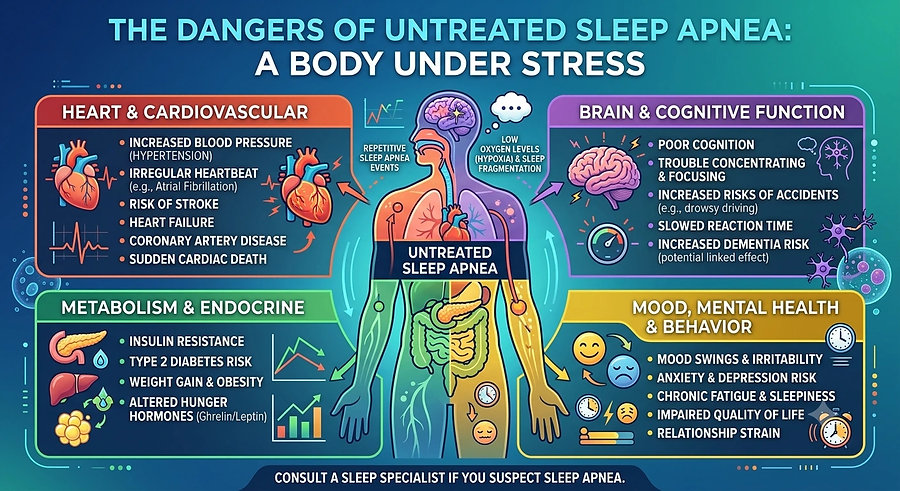
Sleep apnea is far more than a nuisance or a snoring problem. Left untreated, it is associated with serious health consequences:
- High blood pressure, including difficult-to-treat hypertension
- Heart disease, heart attack, and irregular heart rhythms (like atrial fibrillation)
- Stroke
- Type 2 diabetes and insulin resistance
- Weight gain, in a vicious cycle (apnea promotes weight gain, weight gain worsens apnea)
- Depression and anxiety
- Memory and concentration problems
- Dangerous daytime drowsiness, which impairs driving as much as alcohol and contributes to a significant share of drowsy-driving crashes
- Worsened acid reflux and chronic pain
The scariest part, as specialists often note, is that you might not even know you have this very common and very treatable problem.
The Sleep Apnea and Heart Connection
The link between sleep apnea and cardiovascular disease is one of the most important reasons I take it so seriously. Each time breathing pauses, oxygen drops and the body releases stress hormones, raising blood pressure and straining the heart over time.
This is why sleep apnea is a common, and often overlooked, cause of difficult-to-treat high blood pressure. Many studies show that treating sleep apnea with CPAP reduces blood pressure and improves daytime alertness, and observational studies suggest CPAP users have lower rates of stroke and heart attack.
If your blood pressure is hard to control, sleep apnea may be a factor. See: How to Lower Blood Pressure Naturally Without Medication.
The Sleep Apnea and Blood Sugar Connection
Sleep apnea and blood sugar problems are deeply intertwined. Untreated apnea worsens insulin resistance, and research has found that up to 67% of people with sleep apnea may have prediabetes. Untreated apnea can even cause blood sugar spikes within hours of falling asleep.
The relationship runs both directions: poorly controlled blood sugar and obesity raise apnea risk, and apnea worsens metabolic health. Treating sleep apnea is an important, and often missed, piece of managing prediabetes and type 2 diabetes.
See our related guides: Prediabetes: Warning Signs and How to Reverse It and Type 2 Diabetes Reversal: Is It Really Possible?.
How Sleep Apnea Is Diagnosed
If sleep apnea is suspected, your provider will discuss your symptoms and sleep history, often with input from your bed partner. The diagnosis is confirmed with a sleep study, which measures your breathing, oxygen levels, and other data while you sleep. There are two main options:
- Home sleep apnea test: a portable kit you use in your own bed. It is convenient and effective for people likely to have moderate to severe OSA.
- In-lab sleep study (polysomnography): an overnight stay at a sleep center with more comprehensive monitoring. This is used for milder or more complex cases.
Severity is measured by the apnea-hypopnea index (AHI), the number of breathing interruptions per hour. An AHI of 5 or more generally indicates sleep apnea, with higher numbers meaning more severe disease.

How Sleep Apnea Is Treated
The encouraging news is that sleep apnea is highly treatable, and treatment can transform how you feel. Options include:
CPAP Therapy
Continuous positive airway pressure (CPAP) is the first-line and most effective treatment for moderate to severe OSA. A CPAP machine gently delivers pressurized air through a mask, acting like a stent to keep your airway open. Many people notice improved energy, mood, and blood pressure with consistent use. Modern machines are quieter and more comfortable than older models.
Oral Appliances
Custom-fitted mandibular advancement devices, made by a qualified dentist, reposition the lower jaw to keep the airway open. They are a good option for snoring and mild-to-moderate OSA, or for people who cannot tolerate CPAP.
Other Treatments
- Weight loss, which can significantly improve or even resolve OSA in people with obesity
- Positional therapy (avoiding sleeping on your back)
- Treating nasal congestion
- Hypoglossal nerve stimulation, an implantable device that stimulates the tongue to keep the airway open, for select patients
- Surgery in certain cases (nasal, jaw, or soft tissue procedures)
- A newer FDA-approved medication for obstructive sleep apnea in certain patients
The right treatment depends on the type and severity of your apnea and your individual situation, which your provider and a sleep specialist can determine.

Lifestyle Changes That Help
Alongside medical treatment, these habits support better sleep and reduced apnea severity:
- Lose excess weight, one of the most effective ways to improve OSA
- Avoid alcohol, especially close to bedtime, since it relaxes airway muscles
- Quit smoking, which worsens airway inflammation
- Sleep on your side rather than your back
- Keep a consistent sleep schedule and aim for 7 to 9 hours
- Treat nasal congestion and allergies, which are common in Florida
Weight loss can meaningfully improve sleep apnea. See our pillar post: Healthy Habits for Weight Loss.
Common Mistakes I See in My Florida Practice
After 20 years of caring for patients, here are the patterns I see most often with sleep apnea:
- Dismissing loud snoring and daytime fatigue as normal. They are common, but not normal, and they deserve evaluation.
- Assuming you cannot have apnea because you are not overweight. Thinner people, especially postmenopausal women, can have it too.
- Buying CPAP and giving up too soon. It often takes time and the right mask fit to adjust. Work with your team rather than abandoning it.
- Ignoring a partner's observations. Bed partners often notice the most important clues.
- Treating high blood pressure or diabetes without checking for sleep apnea, which can be the hidden driver.
- Relying on apps or gadgets alone. They can raise awareness, but a proper diagnosis requires a medical sleep study.
Frequently Asked Questions (FAQ)
What are the warning signs of sleep apnea?
The most common signs are loud chronic snoring, witnessed pauses in breathing, gasping or choking awake, excessive daytime sleepiness, morning headaches, waking unrefreshed, difficulty concentrating, and irritability. If you have two or more, especially snoring plus daytime sleepiness, consider an evaluation.
Can you have sleep apnea without snoring?
Yes. While snoring is common with sleep apnea, you can have apnea without significant snoring, particularly women and thinner individuals. Daytime sleepiness, fatigue, and witnessed breathing pauses can be present even without loud snoring.
How do I know if I have sleep apnea or just snore?
Snoring alone is just vibrating throat tissue. Sleep apnea involves the airway actually blocking enough to stop or reduce airflow, dropping oxygen and disrupting sleep. Clues that it is more than snoring include witnessed breathing pauses, gasping, and daytime sleepiness. A sleep study provides the definitive answer.
Is sleep apnea dangerous?
Untreated sleep apnea is linked to high blood pressure, heart disease, stroke, type 2 diabetes, depression, and dangerous daytime drowsiness. The encouraging news is that it is highly treatable, and treatment significantly reduces these risks.
How is sleep apnea diagnosed?
Through a sleep study, either a convenient home sleep apnea test or an in-lab overnight study (polysomnography). These measure your breathing, oxygen levels, and sleep to determine if you have apnea and how severe it is.
What is the main treatment for sleep apnea?
CPAP (continuous positive airway pressure) is the first-line and most effective treatment for moderate to severe obstructive sleep apnea. Other options include oral appliances, weight loss, positional therapy, nerve stimulation, surgery, and a newer FDA-approved medication for certain patients.
Can losing weight cure sleep apnea?
For people with obesity, weight loss can significantly improve and sometimes resolve obstructive sleep apnea. Even modest weight loss helps. It is one of the most effective lifestyle interventions, though some people still need additional treatment.
Does sleep apnea get worse with age or after menopause?
Yes. Sleep apnea becomes more common with age, and women's risk rises sharply after menopause, approaching that of men. Any new or worsening snoring, fatigue, or witnessed breathing pauses in midlife is worth evaluating.
Final Thoughts from a 20-Year FNP
Sleep apnea is one of those conditions where a diagnosis can genuinely change your life. I have watched patients who spent years exhausted, foggy, and struggling with high blood pressure transform once their sleep apnea was finally identified and treated. Better energy, clearer thinking, improved mood, lower blood pressure, the difference can be remarkable.
If you recognize the warning signs in yourself, or if your partner has noticed snoring, gasping, or breathing pauses, please do not dismiss it as just snoring or stress. A simple sleep study can provide answers, and effective treatment is available.
If you live in Florida and would like an evaluation for sleep apnea, including arranging the right testing and a personalized plan, please reach out. Restful sleep and better health may be closer than you think.

About the Author
Darlyne Georges, MSN, APRN, FNP-C, is a board-certified Family Nurse Practitioner based in Florida with over 20 years of clinical experience in primary care, sleep health, and chronic disease management. She specializes in evidence-based, individualized care that combines lifestyle medicine, behavioral coaching, and (when appropriate) FDA-approved medical therapies.
Related reading from our team: Low Testosterone, Metabolic Syndrome, and Metabolism After 40.
References
- Obstructive Sleep Apnea. StatPearls. Updated March 2025. https://www.ncbi.nlm.nih.gov/books/NBK459252/
- American Medical Association. What doctors want patients to know about sleep apnea. November 2025.
- Johns Hopkins Medicine. The Dangers of Uncontrolled Sleep Apnea. 2025.
- Mayo Clinic. Obstructive sleep apnea: Symptoms and causes. December 2025. https://www.mayoclinic.org/diseases-conditions/obstructive-sleep-apnea/symptoms-causes/syc-20352090
- Cleveland Clinic. Sleep Apnea: What It Is, Causes, Symptoms and Treatment. https://my.clevelandclinic.org/health/diseases/8718-sleep-apnea
- Loyola Medicine. The Silent Threat of Sleep Apnea. 2026.
- Benjafield AV, Ayas NT, Eastwood PR, et al. Estimation of the global prevalence and burden of obstructive sleep apnoea. Lancet Respir Med. 2019;7(8):687-698.
- U.S. Food and Drug Administration. FDA approves first medication for obstructive sleep apnea. 2024.
Have questions about your health?
Same-week appointments available in-person or via Telehealth in Brandon, FL.
Book an Appointment →

